

Quick Summary
Modern lighting trends for 2026 favour sculptural forms, natural materials and warm tones over the thin, cold fittings of earlier years. Lighting is now chosen as decor first, with statement chandeliers, stacked pendants, wood and aged metal finishes leading the look.
- Oversized chandeliers and angled drops are replacing rows of small spotlights as focal points.
- Wood, textured glass, ceramic, rattan and aged metals make rooms feel grounded and warm.
- Scale a dining pendant to roughly one-third to one-half the table width.
- Layer ambient, task and accent light in each room rather than relying on one ceiling fitting.
- Spend most of the budget on the first fixture people see, such as the dining or living room pendant.
Table of Contents
- Modern Lighting Trends for 2026 at a Glance
- Sculptural and Statement Lighting: Oversized Chandeliers and Angled Drops
- Natural Materials, Warm Metals and Earthy Palettes
- Modern Lighting Trends for 2026 by Room: Living Room, Kitchen and Bedroom
- Buying, Installing and Choosing Lights That Last
- Planning Your 2026 Lighting Update in Your Home
- Frequently Asked Questions
Modern Lighting Trends for 2026 at a Glance
Last Updated: November 10, 2026
Modern lighting trends in 2026 favour sculptural forms, natural materials and warm tones over the thin, cold fittings that dominated earlier years. The shift is most visible in how people choose a light: they want a fixture that works as decor first and a light source second. Lighting has become a feature of the room, not an afterthought bolted to the ceiling.
Lighting design now sits at the centre of home updates. The same ideas keep returning: statement fixtures, organic shapes, wood and textured finishes, aged metals and earthy palettes. Smart features are moving into mainstream ranges, though the design language stays warm rather than gadget-like.
Below, we cover the sculptural pieces worth considering, the materials and colours that look current, how to plan lighting room by room, and what to check before you buy.
Sculptural and Statement Lighting: Oversized Chandeliers and Angled Drops
Statement lighting is the clearest trend for 2026. Oversized chandeliers and dramatic drops are showing up in living rooms and dining areas, replacing rows of small spotlights with one confident piece that serves as both light and decor.
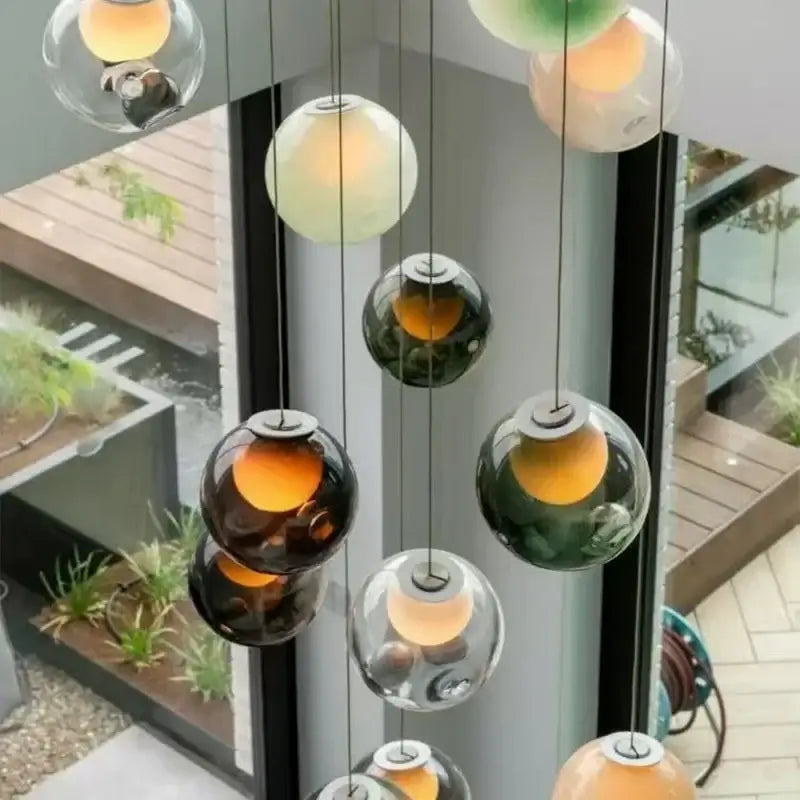
Angled drops, stacked forms and thin stems are the shapes to watch. A stacked pendant adds vertical interest in a high-ceilinged room, while a slim-stemmed fixture keeps a small space feeling open. Square framing and linear designs suit more contemporary interiors, while rounded organic forms soften a minimalist room.
Our advice is to scale the fixture to the table or the room, not to the ceiling alone. The Ash and Anthem modern LED ceiling chandelier is a good example of a piece that works as both a focal point and a primary light source over a dining table or in a living area.
Pendant lights with stacked forms and thin stems
Stacked pendants bring a sculptural quality flat ceiling fittings cannot match, catching light at different heights to create depth and avoid the flat glare of a single bulb.
Thin stems and angled arms add lighter visual weight, suiting rooms where a bulky fixture would overwhelm the space, such as a compact kitchen island or narrow hallway. Check the drop height before ordering, since a pendant hung too low over a table can block sightlines.
Natural Materials, Warm Metals and Earthy Palettes
Natural materials are central to the 2026 look, but the trend is more specific than 'wood and warm metal'.
Warm metal finishes tie these materials together. Aged brass, brushed bronze, antique copper and blackened steel each behave differently over time: aged brass develops a darker patina, brushed bronze holds a uniform matte look, and blackened steel reads as a near-black accent.
Earthy palettes support this direction: soft clay, sand, olive, mushroom and warm grey. A fixture with coloured glass or a textured surface shows best against muted walls and natural wood furniture.
Materials also change how light behaves, and this is where most buying mistakes happen. Frosted and diffused glass spreads light gently and reduces harsh shadows, suiting dining and living areas.
Maintenance is part of the material choice. Unsealed brass and copper need occasional polishing; sealed finishes need only a dry cloth. Textured glass and ceramic collect dust in the surface pattern, so plan for a soft brush.
Watch out: finish names are not standardised across retailers. 'Antique brass' from one supplier can be a dark bronze and from another a bright gold, so check the listed material and order a sample before committing to a full set.
The article compares how common finishes age and how different materials change the light they give off.
| Finish or material | Behaviour over time | Best for |
|---|---|---|
| Aged brass | Develops a darker patina | Visible ageing |
| Brushed bronze | Holds a uniform matte look | Consistent appearance |
| Blackened steel | Reads as a near-black accent | Strong accent |
| Frosted or diffused glass | Spreads light gently, reduces harsh shadows | Dining and living areas |
| Clear glass | Gives sharper, directional light, shows the bulb | Paired with decorative filament lamp |
| Ceramic or plaster shade | Blocks light, throws it up and down | Soft pool of light |
| Rattan or woven shade | Casts patterned shadows | Adding texture |
Modern Lighting Trends for 2026 by Room: Living Room, Kitchen and Bedroom
Good lighting depends on the room. A single ceiling light rarely does everything well, so most homes benefit from layers: ambient, task and accent light.
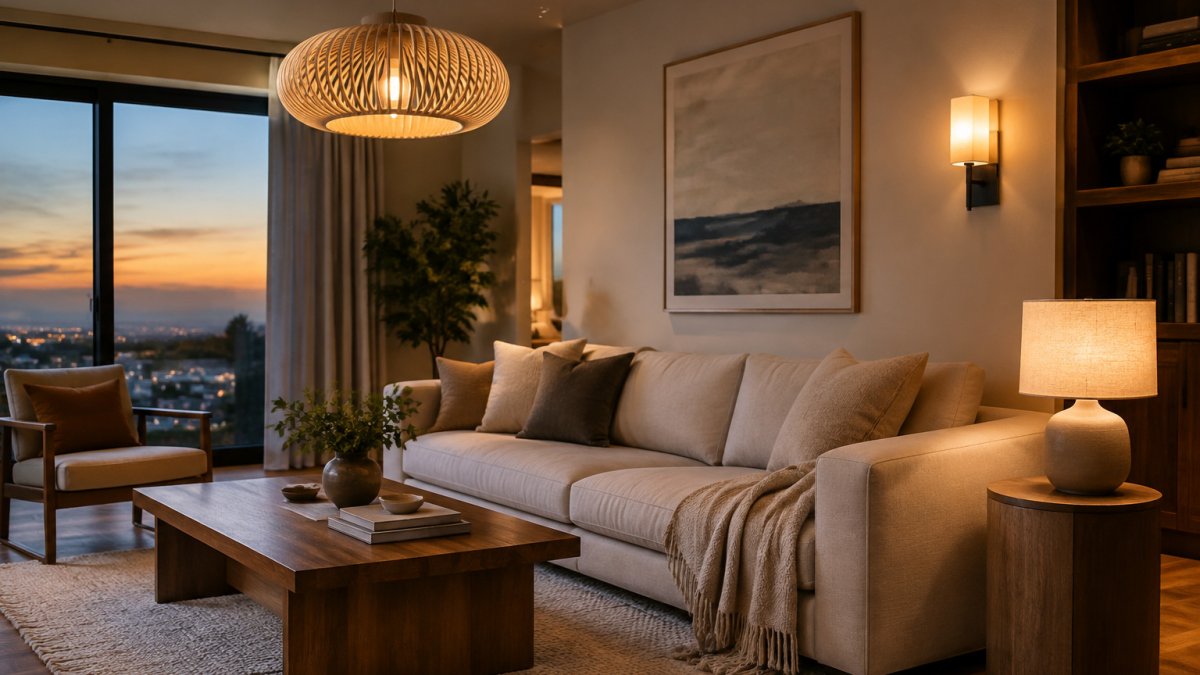
Living room: layered and indirect lighting
In a living room, layered lighting is the most effective approach. Combine a statement ceiling or pendant fitting with wall lights and a table lamp. Indirect light, bounced off a wall or ceiling, feels softer than direct overhead light and suits relaxing evenings.
A modern wall light for living room accent lighting placed beside a sofa or console table adds the soft ambient glow that most living rooms lack.
Kitchen: task lighting over work surfaces and islands
Kitchens need brighter, more focused light. Task lighting over work surfaces and islands prevents shadows while you cook, and pendants over an island combine task light with a decorative focal point.
Under-cabinet or motion-sensor lights are useful for late-night trips to the kitchen without switching on bright overhead fittings.
Bedroom: warm, low-glare light for winding down
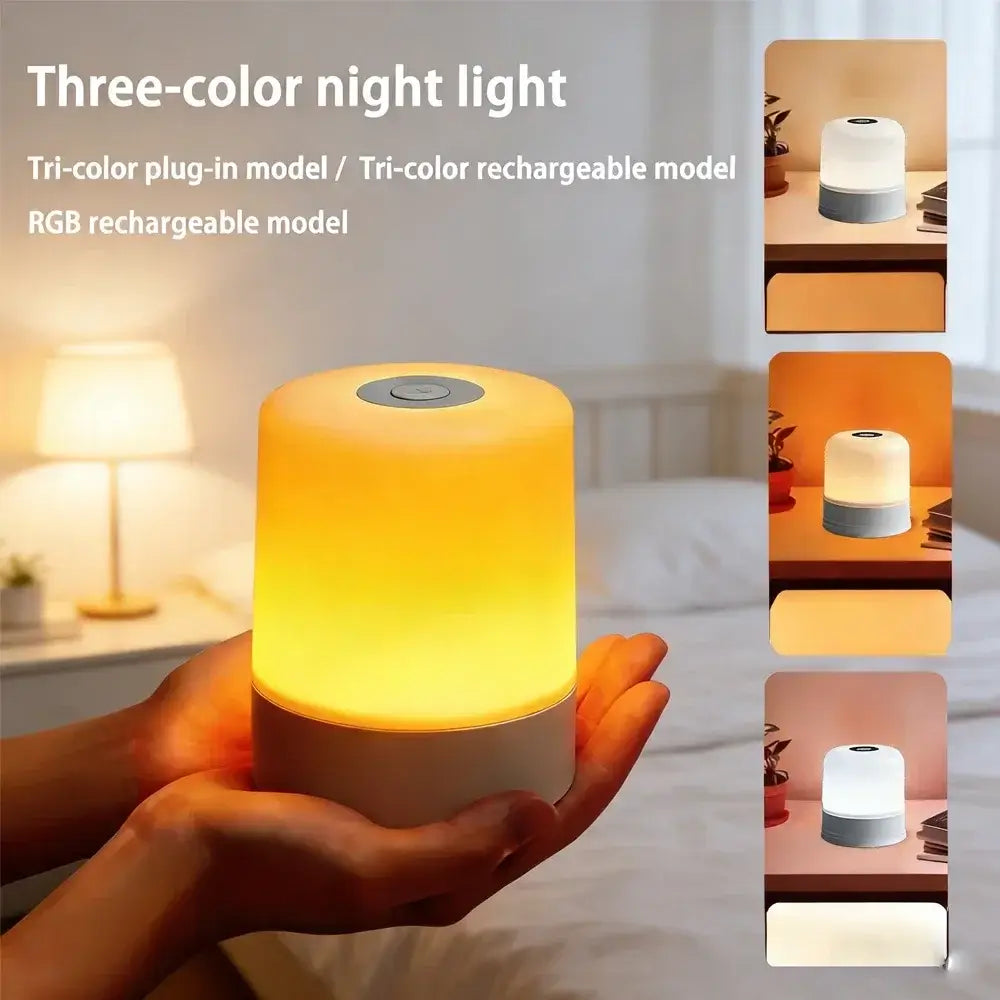
Bedrooms benefit from warm, low-glare light. Wall lights beside the bed free up nightstand space, and a dimmable warm light helps you wind down. A dimmable rechargeable night light is a practical choice for bedside use, since it gives a soft glow without a harsh overhead switch.
Buying, Installing and Choosing Lights That Last
Most trend guides stop at inspiration. This section covers the practical checks that turn a shortlist into a purchase you will still be happy with in five years.
Sizing and placement. A common rule of thumb is to add the room's length and width in feet and use that number in inches as the maximum fixture diameter.
Energy and lifecycle. LED fittings use considerably less electricity than older bulbs and run cooler, which matters for fixtures that stay on for hours. The UK government guidance on energy-efficient lighting outlines what to look for when comparing efficiency.
Trend longevity. To judge whether a trend will last, look for timeless shapes and quality materials rather than novelty finishes. Warm metals, wood and simple geometry tend to age well, while very specific colours, novelty shapes or heavily themed designs can date quickly.
Budget trade-offs. You do not need to replace every light to adopt a trend. Spend on the one fixture people see first, usually the dining or living room pendant, and use simpler, cheaper fittings for task and accent layers, keeping the statement piece as the focal point without stretching the budget across the whole house.
Watch out: avoid buying a fixture based only on its photo. Colour and finish can look different in person, and scale is hard to judge on screen, so check the listed dimensions and materials against your room measurements before committing.
Planning Your 2026 Lighting Update in Your Home
Start with one room rather than the whole house. Pick the space that gets the most use, decide which layers it needs, and choose one statement piece as the anchor. Then add wall lights, lamps or task lights around it to fill gaps.
Mix old and new where it works. A modern sculptural fitting can sit alongside existing furniture, and a warm metal finish can tie together rooms with different styles. Keep colour temperatures consistent across the home so the rooms feel connected.
Finally, measure, plan the layers, and choose fixtures that will still look right in a few years. A considered update in one room often does more for a home than replacing every light at once.
Shop the full Ash and Anthem lighting range to find fixtures for every room.
Frequently Asked Questions
What lighting is in style for 2026?
The main 2026 direction is sculptural fixtures with organic and angled forms, warm metal finishes such as aged brass, and natural materials like wood. Layered and indirect lighting is replacing single overhead lights in most rooms. Smart and tunable LED lighting is also growing in popularity, letting you adjust colour temperature through the day. Pick one or two of these directions so the room feels cohesive rather than busy.
What are the modern lighting trends for a living room in 2026?
Living rooms are moving toward layered lighting: a statement pendant or chandelier for presence, wall lights or floor lamps for ambient light, and a few accent lights for shelves or artwork. Warm white light in the 2700K to 3000K range suits most living spaces. Oversized sculptural fixtures work well in larger rooms, while slimmer linear or angled forms suit smaller ones.
What lighting works best for a small modern room?
In a small room, avoid oversized fixtures that crowd the ceiling. Wall lights and slim linear ceiling fixtures free up floor and table space while still providing even light. Layer one main light with one or two accent lamps. Warm-toned LEDs keep the space feeling calm, and a dimmer lets you lower the light for evenings.
What light fixtures are going out of style?
Fixtures with bright, cold white light and heavy brass-and-glass styling from earlier decades are fading. Single flush-mount ceiling lights as the only light source are also falling out of favour in favour of layered schemes. Choosing fixtures with a clean, uncluttered profile will keep your lighting looking current for longer.


