

Last Updated: November 14, 2026
Quick Summary
To create a peaceful home, start by decluttering one surface at a time and giving every object a home, since clearing visual clutter lowers the stress a room quietly creates. Then choose two base colors and one accent, repeat them at least three places per room, and layer three dimmable light sources at different heights. A peaceful home needs fewer things, softer light, and a color scheme that repeats itself.
- Clear one surface at a time, starting with the entryway table, and keep only weekly-use items on open shelves.
- Sort clutter before buying storage bins, because bins organize clutter rather than remove it.
- Keep the ceiling lighter than the walls so a small room gains height for free.
- Build three dimmable light layers: ambient, task, and accent, at different heights.
- Renters can add a mirror opposite the light source to double the glow without wall holes.
Table of Contents
- Start With Decluttering for a Peaceful Home
- Choose Calming Colors for Home Rooms
- Layer Soft Lighting and Greenery for a Calming Atmosphere
- Practical Home Sanctuary Ideas for Small Spaces and Rentals
- Frequently Asked Questions
Start With Decluttering for a Peaceful Home
Learning how to create a peaceful home sanctuary begins with subtraction, not addition. Clearing visual clutter is the fastest way to lower the stress a room quietly creates.
A peaceful home sanctuary is a living space arranged to reduce mental load, ease the senses, and support rest. Everything in the room should earn its place.
Start here:
- Clear one surface at a time, starting with the entryway table
- Keep only items you use weekly on open shelves
- Give every object a home, then label the home
- Box the "maybe" pile and revisit it in a month
- Move paperwork into closed storage, never onto counters
A common mistake is buying storage bins before decluttering. Bins organize clutter, they don't remove it. Sort first, measure second, shop third.
The American Psychological Association's research on clutter and stress points to a simple idea: our surroundings shape how we feel. A clear room gives your mind fewer things to track. That is decluttering for a peaceful home in one sentence.
Once surfaces are clear, the room's real bones show, and color and light start to matter.
Choose Calming Colors for Home Rooms
Calming colors for home rooms share one trait: they sit quietly in the background. Soft greens, warm whites, muted blues, and sandy neutrals let the eye rest instead of scan.
| Room | Calming Color Direction | Why It Works |
|---|---|---|
| Bedroom | Warm white, soft sage | Low contrast helps the body wind down |
| Living room | Sand, muted olive | Grounds the space without feeling heavy |
| Bathroom | Pale blue, soft grey | Feels clean and cool to the eye |
| Entryway | Warm taupe | Welcoming without shouting |
Pick two base colors and one accent, then repeat them in at least three places per room: a throw, a cushion, a lampshade, a pot. Repetition makes a color scheme feel intentional.
Watch out: painting every wall the same shade in a small room can make it feel flat. Keep the ceiling lighter than the walls and the room gains height for free.
Renters can get the same effect with textiles. A large rug, curtains, and a slipcover change a room's color story without touching a single wall.
Layer Soft Lighting and Greenery for a Calming Atmosphere
A calming atmosphere comes from layers of low light, not one bright ceiling fixture. Three dimmable sources at different heights change how a room feels after dark.
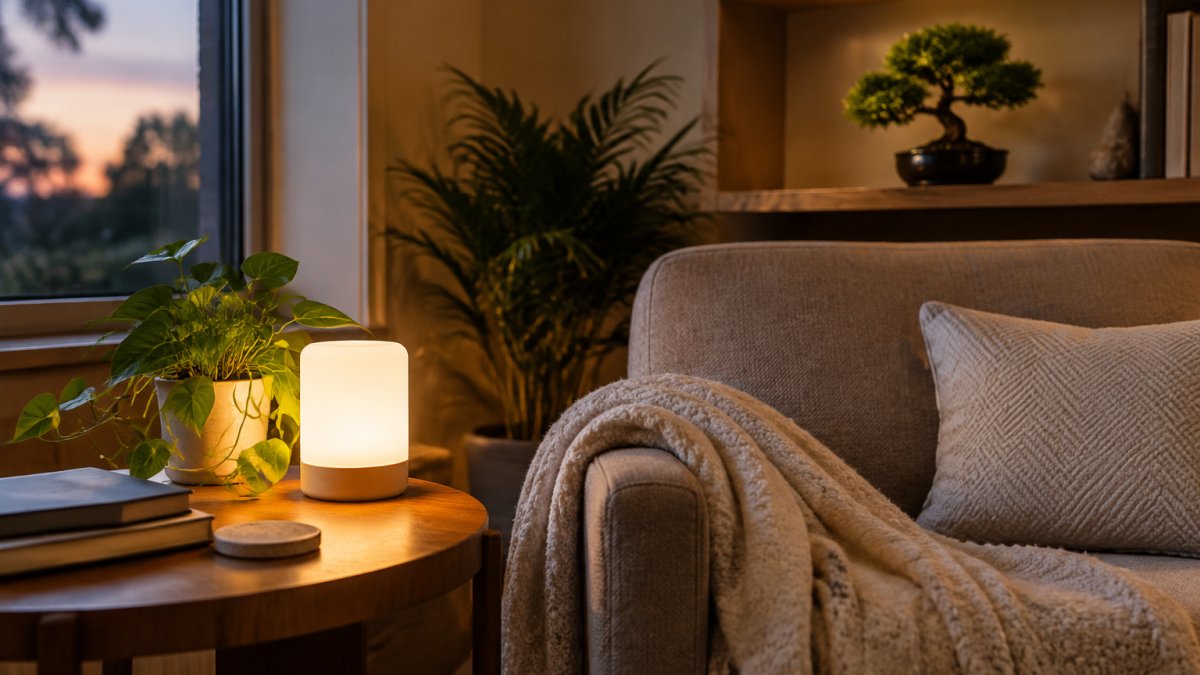
The layers to build:
- Ambient: a floor lamp or dimmable table lamp for overall glow
- Task: a small light for reading or working
- Accent: a decorative light that adds warmth to a corner
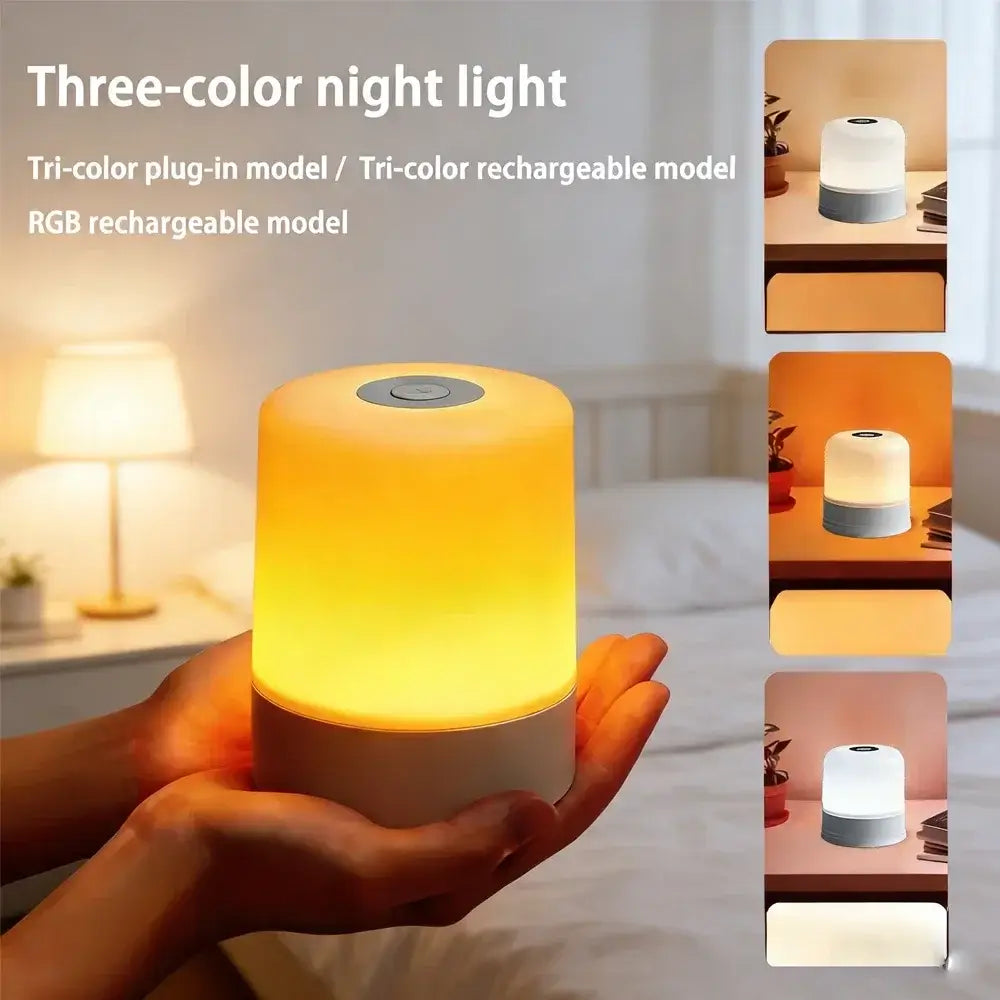
Our dimmable LED night light is a practical starting point. It runs on a rechargeable battery or plugged in, so it moves from nightstand to hallway to bathroom. Dimming lets you pick a soft glow for late-night trips instead of a harsh overhead switch.
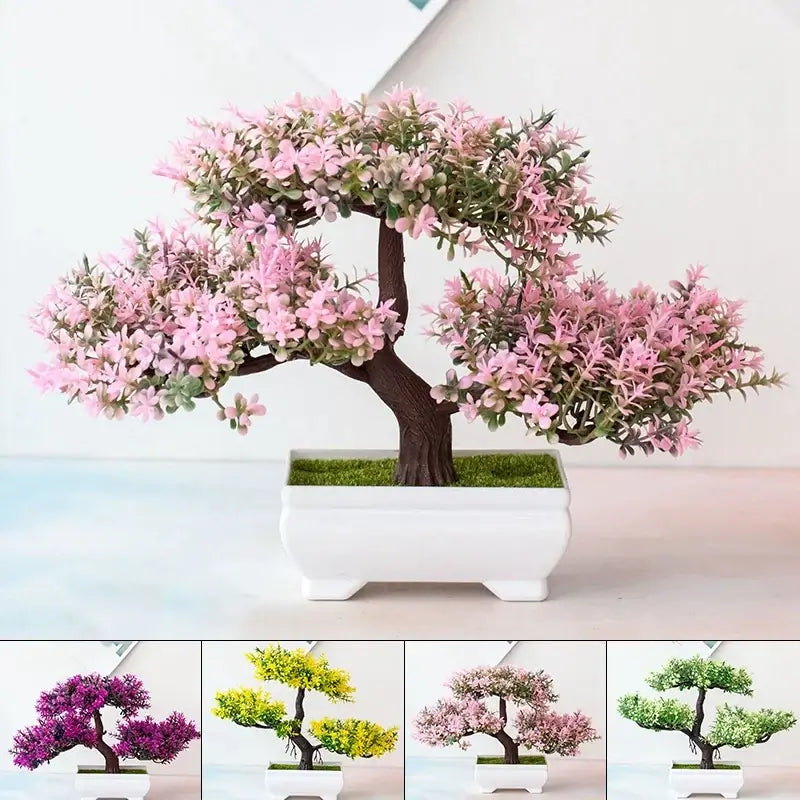
Greenery is the second layer. A faux bonsai tree adds softness to a room with zero upkeep, and it suits spaces where you don't want to maintain living plants. For current warm, sculptural lighting trends before choosing fixtures, our guide on modern lighting trends covers what is shifting in 2026.
One honest limit: no lamp fixes a room with too much overhead light and no dimmer. Fix the light source first, then layer.
Practical Home Sanctuary Ideas for Small Spaces and Rentals
Small spaces can hold a sanctuary just as well as large ones. Choose pieces that do two jobs and changes that leave no holes in the wall.
Home sanctuary ideas that work in a rental:
- Use a room divider to separate rest from work
- Swap a coffee table for a slim console with storage
- Hang curtains wide and high to fake a bigger window
- Add a mirror opposite the light source to double the glow
- Choose multi-purpose furniture: an ottoman that stores blankets
For deeper styling guidance in tight rooms, our article on small apartment styling tips walks through the details. If your living room is the space you want to fix first, styling a small living room with smart layout choices covers seating placement and flow.
Best for: renters who want calm without permanent changes. Skip if: you own the space and plan a full renovation, where structural changes will do more.
A peaceful home does not require a big budget or a big room. It requires fewer things, softer light, and a color scheme that repeats itself. Ash and Anthem offers a curated selection of home lighting, greenery, and lifestyle essentials that help make that shift easy, including dimmable lamps you can move room to room and low-maintenance greenery. Get started with Ash and Anthem and turn your rooms into a home sanctuary you actually want to come back to.
Frequently Asked Questions
How can I create a peaceful home environment in a small apartment?
Focus on a few high-impact changes rather than a full redesign. Clear surfaces and use accessible storage to cut visual clutter, then add one soft light source such as a dimmable LED night light and one plant or faux plant to soften hard lines. A crystal suncatcher in a sunny window adds light without taking up floor or shelf space, which matters in small rooms.
What colors make a home feel calm and relaxing?
Soft, muted tones work best: warm whites, sage and olive greens, dusty blues, and pale greys. These calming colors for home interiors lower visual contrast, so rooms feel quieter without repainting everything. Pick two or three shades and repeat them across walls, textiles, and accessories so the space feels cohesive rather than busy.
How do I declutter my home to make it feel calmer?
Start with one room and one surface at a time. Remove anything you have not used in a year, then give what remains a fixed home in accessible storage, such as baskets, closed shelving, or multi-purpose furniture. Decluttering for a peaceful home is less about owning less and more about making sure every item has a place, which keeps visual clutter from returning.


